Spasticity is a complex neurological symptom that alters how muscles interact with the nervous system. Frequently arising after a stroke, brain injury, spinal cord injury, or alongside conditions like multiple sclerosis, spasticity presents as an involuntary, velocity dependent increase in muscle tone. In plain terms, the faster or harder a muscle is stretched, the more aggressively it resists and contracts.
Living with spasticity can turn simple everyday movements into exhausting physical battles. A tight calf muscle can make walking feel stiff, while a persistently clenched hand can severely limit independence with basic tasks like dressing or cooking.
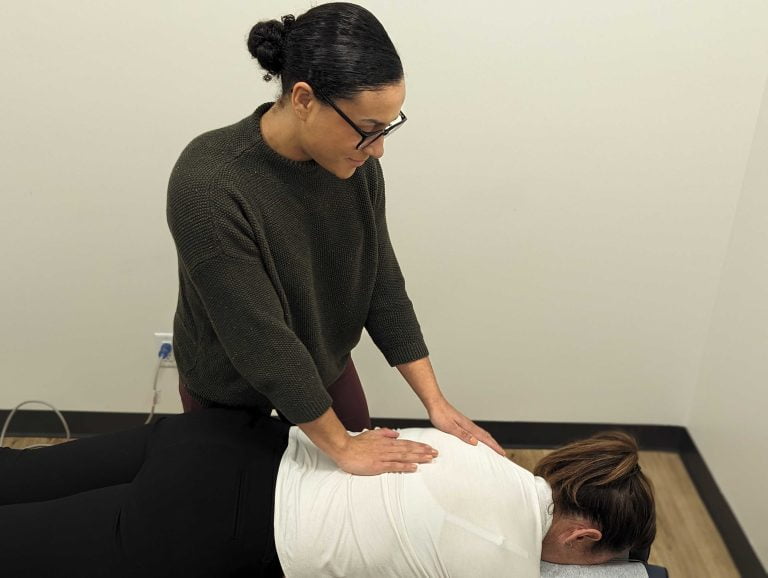
At Parkway Physiotherapy, we look beyond the symptoms to address the underlying neurological patterns. While medical interventions like medications or targeted injections play an important role for many individuals, a structured physical rehabilitation program is fundamental to long term management. By combining specific manual stretching, targeted strength training, and positional strategies, we work to help you manage muscle tone, reduce physical discomfort, and improve your overall mobility.
The Biology of Spasticity: Why Muscles Resist
To manage spasticity effectively, it helps to understand why the muscle tissue behaves this way. In a healthy nervous system, the brain and spinal cord maintain a continuous, balanced conversation with your muscles. When you want to move your arm, your brain sends a signal to contract the necessary muscles while simultaneously sending an inhibitory signal to let the opposing muscles relax.
When an injury occurs within the central nervous system, those vital inhibitory signals are often disrupted or lost. The local spinal cord reflexes take over, becoming hyper reactive.
Without steady regulation from the brain, the stretch receptors inside the muscle tissues misinterpret ordinary movement as a dangerous overstretch. The muscle overreacts by locking down into a persistent state of contraction. Over time, if this elevated tone is left unmanaged, the muscle fibers and surrounding connective tissues can permanently shorten, leading to structural joint stiffness known as contractures.
The Core Pillars of Physical Management
Managing spasticity requires a systematic approach that shifts the nervous system out of a hyper reactive state and preserves the physical length of the tissue. A good rehabilitation framework focuses on three essential pillars.
Neurogenic Stretching and Prolonged Mobility
Traditional, quick static stretching is rarely effective for spasticity because fast movements trigger the hyperactive stretch reflex, causing the muscle to tighten further.
Instead, we use slow, prolonged positioning and sustained stretching techniques.
Holding a muscle in a lengthened position for extended periods, sometimes using custom splints, wedges, or serial casting, safely desensitizes the overactive stretch receptors. This prolonged exposure allows the muscle fibers to relax, temporarily dropping baseline tone and creating a therapeutic window where you can move more freely.
Targeted Strengthening of Opposing Muscle Groups
A common clinical misconception is that you should never strengthen a spastic limb because it might increase muscle tightness. Modern neurological research has thoroughly disproven this myth. Spastic muscles are frequently weak muscles, and avoiding strengthening can lead to severe muscle wasting. We focus heavily on strengthening the antagonist muscle groups, which are the muscles opposite the tight, spastic ones.
For example, if your bicep is spastic and pulling your elbow closed, we work on progressively strengthening your triceps. Engaging the opposing muscle triggers a neurological mechanism called reciprocal inhibition, which tells the spastic bicep to temporarily let go and relax.
Precise Positioning and Environmental Supports
Spasticity is highly sensitive to gravity, body positioning, and external sensory input. If a person spends hours sitting in a poorly supported wheelchair or lying in bed with a foot twisted inward, the spasticity will continuously reinforce those negative patterns. We analyze your daily positioning to establish strategic setups at home and work.
This includes utilizing specific foam blocks, pillows, and resting splints to keep your limbs in neutral, low tension alignments throughout the day and night. Proper positioning minimizes the continuous reflex stimulation, preventing morning stiffness and lowering the risk of joint breakdown.
Overcoming the Daily Triggers of Muscle Tightness
Spasticity does not remain completely static throughout the day; its intensity fluctuates based on a variety of internal and external triggers. Part of our role at Parkway Physiotherapy is helping you identify and minimize these daily spikes.
Muscle tone can worsen significantly due to sudden temperature changes, tight clothing, full bladders, skin irritation, or high stress levels. When your body experiences discomfort or anxiety, your sympathetic nervous system ramps up, which directly increases the excitability of your spinal reflexes. By managing these everyday variables and incorporating gentle, rhythmic breathing during your home exercises, you can help maintain a more predictable, comfortable baseline.
Building a Coordinated Care Plan in Langford
Every presentation of spasticity is unique. Some individuals deal with mild, localized stiffness in a single ankle, while others manage full body changes that impact balance and posture. Because of this variability, a standardized exercise sheet is never enough.
Our team at Parkway Physiotherapy collaborates with your broader medical network, ensuring our physical therapy sessions align directly with your medical treatments. If you receive botulinum toxin injections or use muscle relaxants, we strategically time your high intensity stretching and strength training during the peak windows of those medications to maximize your functional gains.
We focus on practical, goal oriented outcomes. Whether your primary objective is to walk more smoothly along Langford pathways, improve your ability to reach for objects, or simply reduce the painful muscle spasms that disrupt your sleep, we build the rehabilitation structure to support your daily life.
To take control of your symptoms, optimize your movement patterns, and build a safe path toward improved physical performance, contact Parkway Physiotherapy today to schedule your comprehensive neurological assessment.